What does the robot do
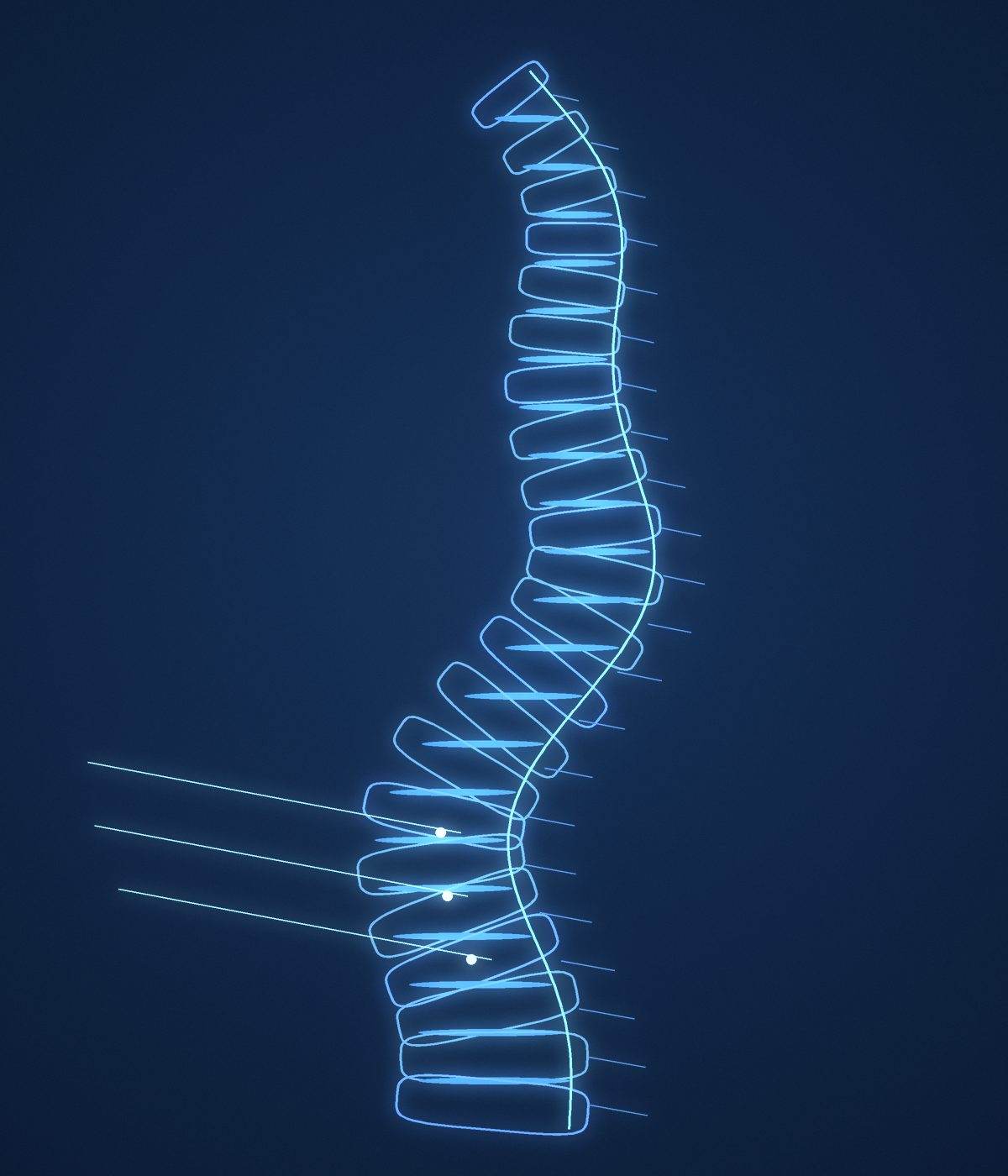
The robot does not operate independently: it is a tool that guides the surgeon. Based on 3D images acquired before or during the procedure, the neurosurgeon plans the trajectory and size of each screw on the computer. In the operating room, the robotic arm positions itself along the planned trajectory and maintains it stable, while the navigation system displays the position of instruments in real time.
Planning
Digital planning allows pre-selection of the entry point, angle, length and diameter of implants, taking into account individual anatomy, bone quality and any deformities.
Navigation and guided instrumentation
Integration between the robot and navigation enables accurate and reproducible placement of pedicle screws, even through small percutaneous incisions. Studies conducted in Lugano have analysed the accuracy of screw placement and the learning curve of the technique.
Possible benefits
- Accuracy in implant positioning
- Smaller incisions and less muscle damage in percutaneous techniques
- Reduced radiation exposure for the surgical team
- Support in reconstructive surgery and complex anatomies
When indicated
Robotics is particularly useful in stabilization (arthrodesis) procedures for spondylolisthesis, instability, fractures, deformities, and revisions. Not all spinal interventions require its use: the choice of technique always depends on the problem to be treated.
The names and logos of technology manufacturers are indicated only according to institutional and supplier authorizations.